This Is The Guide to Australian BSB Numbers: What They Are & How to Find Them. BSB codes are a searchable 6-digit identification number which is unique to every bank branch in Australia.
BSB Lookup
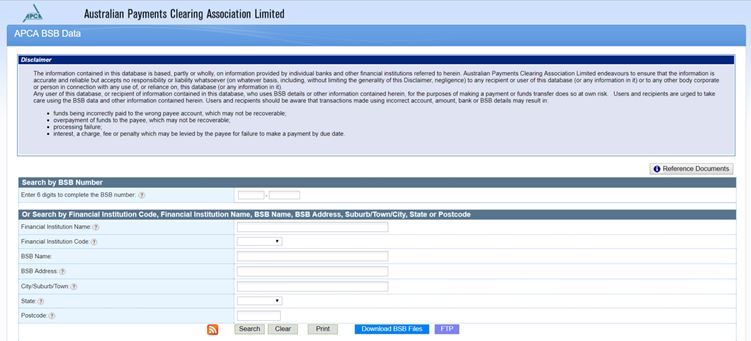
Search Australian BSB numbers by number, bank, or branch location.
Enter a 6-digit BSB number with or without the hyphen.
Search by bank, location, or both — any combination works. Enter a suburb, city, state (NSW, VIC…) or postcode.
Bank codes data are regularly updated.
BSB Numbers
- A BSB number is a 6-digit code that identifies the bank and branch for any Australian bank account, and it is always exactly 6 digits.
- The first 2 digits identify the bank, the 3rd digit identifies the state, and the last 3 digits identify the specific branch.
- A BSB number is not the same as an account number — you need both to send or receive a domestic payment.
- For international transfers, a SWIFT code replaces the BSB number.
- You can look up and verify any Australian BSB number using the BSB search tool on this site.
What Is a BSB Number?
“BSB” is short for Bank State Branch, and is a 6-digit code used by the Australian banking system to identify the specific bank and branch associated with an account.
Every Australian bank account has one. When you transfer money domestically, the BSB tells the payments system where to direct the funds.
The 6-Digit BSB Format Explained
The position of each of the 6 digits has a meaning.
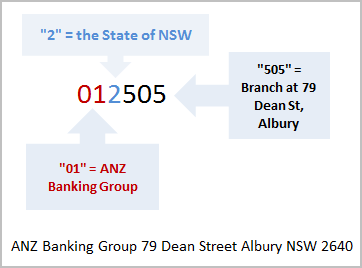
The first 2 digits identify the financial institution, the 3rd digit identifies the state or territory, and the final 3 digits identify the specific branch within that bank and state.
So a BSB like 063-000 indicates Commonwealth Bank (06), in New South Wales (3), and a particular branch (000).
Are All BSB Numbers 6 Digits?
Yes. BSB numbers are always exactly 6 digits, sometimes written with a hyphen after the third digit (e.g. 063-000) but always 6 digits in total.
Either format refers to the same code.
Example of an Australian BSB Code:

BSB State Codes in Australia
The 3rd digit in a BSB number indicates the state or territory where the branch is registered:
- 2 – New South Wales, Australian Capital Territory (NSW, ACT)
- 3 – Victoria (VIC)
- 4 – Queensland (QLD)
- 5 – South Australia, Northern Territory (SA, NT)
- 6 – Western Australia (WA)
- 7 – Tasmania (TAS)
Note that some banks use non-geographic BSBs for centralised processing, so the state digit may not always match the physical location of your branch.
BSB Number vs. Other Banking Codes
The Australian banking system uses several different codes for different purposes. Confusing them is a common source of failed transfers.
BSB Number vs. Account Number
Your BSB number and your account number are 2 separate things. The BSB identifies the bank and branch; the account number identifies your specific account within that branch.
When making a payment, you need to provide both. The BSB always comes first, followed by the account number.
Is a BSB Number the Same as an IBAN or Routing Number?
No. Australia does not use the IBAN (International Bank Account Number) system, which is common in Europe, or the routing number system used in the United States.
The BSB is Australia’s domestic equivalent: it serves the same routing function but applies only within the Australian payments network. International transfers require a different code entirely
How to Find Your BSB Number
There are several straightforward ways to locate your BSB.
Using Online Banking and Mobile Apps
Log in to your bank’s online banking or mobile app and navigate to your account details. The BSB is usually displayed alongside your account number on the account summary screen.
Example: CommBank app

Most banking apps also allow you to share or copy your BSB directly from the account details view.
Checking Your Bank Statement or Debit Card
Your BSB number appears on your bank statements, typically in the account details section at the top of each statement.
Some banks also print the BSB on your debit card, though this varies by institution.
Using the BSB Lookup Tool
If you have a BSB number and want to confirm which bank and branch it belongs to, the BSB search tool on this site lets you search by BSB number, bank name, or branch location. It is free and does not require an account.
How to Use the BSB Search Tool Effectively
The BSB search tool (above) offers 2 search modes to suit different needs.
Searching by BSB Number
Enter the 6-digit BSB number (with or without the hyphen) into the BSB Number tab. The tool will return the bank name, branch name, and address linked to that code.
This is the fastest way to verify a BSB before sending a payment.
Searching by Bank / Location
The Bank / Location tab lets you search by bank name, suburb, state, postcode, or any combination of those. You can use either field on its own.
Entering just a bank name returns all its registered BSBs, and entering just a location returns all BSBs in that area.
This is useful when you know where you bank but do not have the BSB code in front of you.
How to Verify a BSB Number
Before making any payment, confirm the BSB using the BSB search tool. Enter the number you have been given and check that the bank and branch details match what you expect.
If the BSB does not appear in the tool, or the details do not match, contact your bank before proceeding.
Common BSB Mistakes and How to Avoid Them
Entering an incorrect BSB is one of the most common causes of failed or misdirected payments in Australia.
What Happens If You Use the Wrong BSB Number?
If you enter a BSB that does not exist, most banking systems will reject the payment before it is processed. If the BSB exists but belongs to a different branch, the payment may go to the wrong account.
Recovering a misdirected payment can take days and requires contact with both banks involved. The Australian Financial Complaints Authority (AFCA) can assist if a bank is uncooperative, but prevention is the far better cure.
BSB Changes: Mergers and Branch Closures
BSB numbers can change when banks merge or close branches. When a branch closes, its BSB is typically redirected to a centralised processing BSB belonging to the same bank.
If you are using a BSB you have not checked recently, particularly one associated with a regional branch, you should verify it using the BSB search tool before sending a payment.
Do You Need a BSB for International Transfers?
When you send money overseas, the BSB is not sufficient. International transfers operate on a separate network that uses different identifiers.
BSB vs. SWIFT Code
A SWIFT code (also called a BIC, or Bank Identifier Code) is the international equivalent of a BSB. It identifies the bank at a global level rather than the Australian branch level.
For an incoming international transfer, you will typically need to provide the recipient’s SWIFT code, BSB, and account number. The SWIFT code routes the payment to the correct bank globally; the BSB and account number then direct it to the correct account within Australia. You can look up Australian SWIFT codes using the SWIFT code lookup on this site.
Do You Need a BSB for International Transfers?
When you send money overseas, the BSB is not sufficient, because International transfers operate on a separate network that uses different identifiers.
BSB vs. SWIFT Code
A SWIFT code (also called a BIC, or Bank Identifier Code) is the international equivalent of a BSB. It identifies the bank at a global level rather than the Australian branch level.
For an incoming international transfer, you will typically need to provide the recipient’s SWIFT code, BSB, and account number.
The SWIFT code routes the payment to the correct bank globally; the BSB and account number then direct it to the correct account within Australia.
You can look up Australian SWIFT codes using the SWIFT code lookup on this site.
The Future of BSB Numbers in Australia
The rise of real-time payments has changed how many Australians send money, but BSB numbers have not disappeared.
BSB Numbers and the New Payments Platform (NPP)
The New Payments Platform (NPP), launched in 2018, is Australia’s fast payments infrastructure. It allows near-instant transfers 24 hours a day, 7 days a week.
Under the NPP, accounts are still linked to BSB and account numbers in the background. The platform did not replace BSBs; it built on top of the existing system.
PayID vs. BSB: Is the BSB Becoming Obsolete?
PayID is a feature of the NPP that lets you link your bank account to a phone number, email address, or ABN. This makes it easier to receive payments without sharing your BSB and account number.
PayID simplifies the transfer experience for consumers, but BSBs remain the foundation underneath. Banks, businesses, and payroll systems continue to rely on BSBs for the vast majority of domestic transactions.
Swift Codes
This page was last modified 16 Jun 2026